
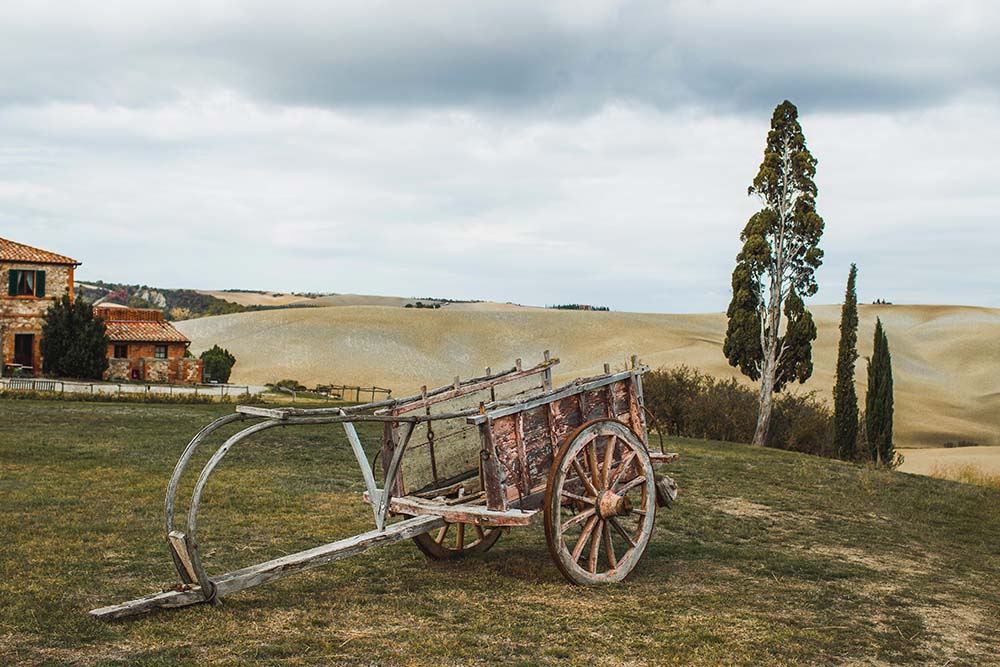
No man, having put his hand to the plough, and looking back,
Is fit for the Kingdom of God.
Collect For Epiphany 1 (Plough Sunday)
The celebration on the First Sunday after Epiphany has been increasingly revived in modern times as ‘Plough Sunday’ – a tradition that goes back centuries (the earliest record dates back to 1423 in Durham Cathedral). In the agricultural calendar, as the days start to stretch and the coming spring light promises to defeat the darkness of winter, it signals the first ploughing of the year which takes place on the first working day after the Christmas season on ‘Plough Monday’. Essentially, our Plough Service is a way in which we can say ‘Please’ – just as on Harvest Sunday, we say ‘Thank you’. The Plough Sunday liturgy is beautiful and poetic, and as we stand in blessing around the decorated plough in Church, we are reminded of our own responsibilities to care for God’s creation.
I suspect that if asked where the food they are eating comes from, the answer from many would be Aldi, Supervalu or Tesco (ok, Waitrose if you’re posh…). We need to remember that if a farmer doesn’t grow it, we can’t eat it – and unless we in turn care for God’s provision in creation, the land will die. We use chemical fertilisers, toxic weedkillers, antibiotics and hormones to enhance growth; all of these may appear to increase productivity and yield – but in the longer term, they literally will cost the earth.
In recent years, we have seen a welcome increase in the availability of organic and/ or Fairtrade produce, even better when locally grown. Yes, it’s more expensive (and there’s no denying that challenge when people are already struggling) – but much of the cost is markup by large retail chains, which maintain their profit by driving down supplier costs. Then it’s not just small farmers who struggle, but local shops, and they will not be able to last much longer against the competitive power of the multinationals. In the end, rather than enjoying food that has been responsibly produced with care and consideration for the environment and has a known provenance – if at all possible, sourced locally – we will eat the refined product of a heartless industrialised process. We may as well just live on vitamin pills.
Of course, individually we can’t make much of a difference – but giving thanks that we have been given all we need – and concentrating on that, rather than what we want, becoming more aware and behaving more responsibility, every small difference adds up. We are commanded to preserve God’s gift of creation’s rich, healthy soil on behalf of future generations, not to waste that gift on a dying desert choked by thorns. That’s your choice. Choose life.
The following prayer is taken from the Plough Service Liturgy.
Our Unworthiness of God’s Gifts
No man, having put his hand to the plough, and looking back,
Is fit for the Kingdom of God.
When we are ungrateful for the rain, and the sun, the snow and the frost, in their season,
And forget they are god’s gifts to us:
When we are blind to the mystery of germination,
And forget it is God’s handiwork:
When we are careless with the beasts,
And forget they are God’s creatures:
When we are unkind to men and women,
And forget they are God’s children:
When we scrimp our work,
And forget we are God’s workmen:
When we ill-treat the land
And forget it is the splendour of God:
May the almighty and all-loving Father make you clean from the wrong you have done in the past: May our merciful Lord and Saviour Jesus Christ make you strong to sin no more in the future: May the gracious and life-giving Holy Spirit make you faithful to God again today: To whom be the Glory for ever and ever. Amen.
Heavenly Father, we your people thank you and bless you for our creation, preservation and above all the love you show in giving your Son to be our Saviour, Redeemer and friend. Give us a continual sense of your presence, so that our praise may not be only on our lips but in our lives. May we be a living sacrifice, using our gifts according to your purpose, in the power of your Holy Spirit. Amen

Harvest Thanksgiving at St Michael and All Angels Waterville
In celebrating God’s creation and understanding , that we are part of his wonderful world, we understand that Christ, the Pantocrator, the Ruler of All, wants to marry his creation in us.
Praying Together 4th October 2026
A Meditation for Trinity 18 - Harvest 2026CollectEternal God, you crown the year with your goodness and you give us the fruits of the earth in their season: grant that we may use them to your glory, for the relief of those in need and for our own well-being; through...
Praying Together 20th September 2026
Salvation.
It can’t be earned. No-one can get more than the next person. There are no degrees of salvation. Salvation is personal and unique to each human being. It is the complete gift – all you can ever need.
Praying Together 13th September 2026
Our responsibility in the Christian life is to prepare people for receiving the Gospel – remembering that they are able to meet Christ themselves directly in prayer and scripture. We cannot meet Him on their behalf, and in His walk alongside them they will grow as His body on earth.
Praying Together 30th August 2026
Just like those early disciples and apostles there’s an important work to continue. You and I are part of that bunch of followers – ordinary people – let’s keep that in mind – as we reach out to others, each and every day of our lives.

Praying Together 23rd August 2026
Cambridge dictionary definition: ‘Conform’ – to behave according to the usual standards of behaviour that are expected by a group or society.

Praying Together 16th August 2026
We share the shame of both if we fail to address the divisive hatred within our own purportedly Christian ‘tribe’ before condemning others. For Scripture also says Judge not lest ye yourself be judged (Matthew 7:1). Jesus Himself makes it clear that hypocrisy has no place in a Kingdom founded upon love.

Praying Together 9th August 2026
Trusting Jesus and obeying His call takes commitment, it takes faith, it takes the courage to face antagonism, discomfort and sometimes suffering.

Praying Together 26th July 2026
Just cling to the promise that neither height nor depth, nor anything else in all creation, will be able to separate us from the love of God that is in Christ Jesus our Lord

Pray Together 19th July 2026
We define hope as ‘to want something to happen or to be true, and have a good reason to think that it might’.

Praying Together 12th July 2026
But the real task to which godparents promise is to ensure that the newly-baptised are supported in their Christian growth, by prayer, advice and example.

Praying Together 5th July 2026
We obey His command, but not as slaves – instead, he invites us to be willing servants, alongside the freedom to always ask and reason together with Him as we choose our actions. Therein lies the path to Wisdom, and in God’s Wisdom lies gentleness, humility and rest for our souls.