

Collect
Almighty and everlasting God, by whose Spirit the whole body of the Church is governed and sanctified: Hear our prayer which we offer for all your faithful people, that in their vocation and ministry they may serve you in holiness and truth to the glory of your name; through our Lord and Saviour Jesus Christ.
Matthew 11: 16-19, 28-30
16 ‘But to what will I compare this generation? It is like children sitting in the market-places and calling to one another,
17 “We played the flute for you, and you did not dance; we wailed, and you did not mourn.”
18For John came neither eating nor drinking, and they say, “He has a demon”; 19the Son of Man came eating and drinking, and they say, “Look, a glutton and a drunkard, a friend of tax-collectors and sinners!” Yet wisdom is vindicated by her deeds.’*
28 ‘Come to me, all you that are weary and are carrying heavy burdens, and I will give you rest. 29Take my yoke upon you, and learn from me; for I am gentle and humble in heart, and you will find rest for your souls. 30For my yoke is easy, and my burden is light.’
Reflection
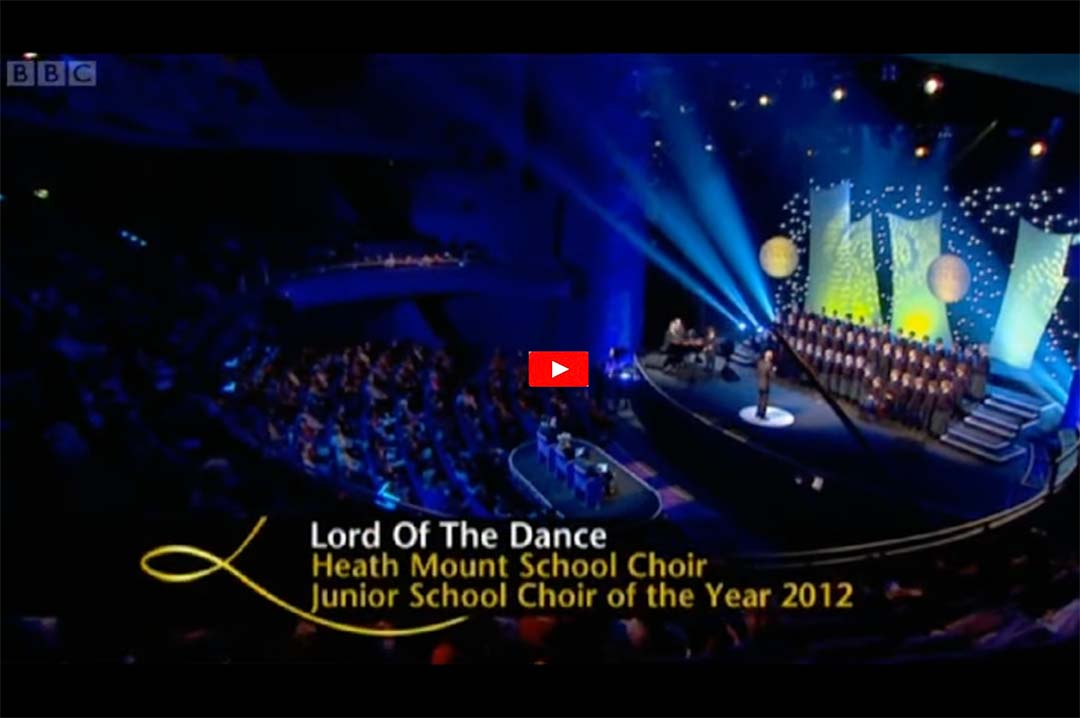
“We played the flute for you, and you did not dance; we wailed, and you did not mourn.” Matthew 11:17
But whose music should we dance to?
“The trouble with Jesus and his followers”, complain the religious establishment “is that they don’t do what we tell them. They are supposed to obey the rules and regulations we insist upon, but they don’t. Those laws are set down for their own good. If they fail to abide by them, our peaceful society itself will be at risk”. They believe that their status gives them the right to dictate those rules and regulations for their own benefit. They seek to justify and legitimise their preferences by terming them to be ‘traditional’ values.
It’s not that rules and regulations are wrong in themselves – on the contrary, they are essential for guidance and mutual societal growth. The difficulty arises when instead or promoting and supporting justice and equity, they are modified to suit the wishes of those in leadership roles – religious or political. They need people to do what they say without question; but as we have seen (and are seeing) often, that way leads to corruption. They make laws to suit themselves – and their pockets. They play the flute (badly), and expect everybody to dance to their music. When people refuse, they don’t like it and call them subversive, traitors and often charge them with criminality.
They can’t cope with people like Jesus and John the Baptiser who dance to a different drum and are rocking the boat. The religious authorities are increasingly uncomfortable and challenged. John’s asceticism is calling for people to repentance and renewal; Jesus’ humanity and unconditional love is inviting ordinary people to Himself irrespective of who they are or their position in a hierarchical society. This kind of behaviour is not going to keep people sedated, unquestioning and obedient. Quite the opposite.
Essentially, said the philosopher Henry David Thoreau, unquestioning obedience results in slavery. Instead, Jesus offers freedom.
Our Lord challenges us to love as He loves us – but with a difference. The dance He leads gives us a choice. We obey His command, but not as slaves – instead, he invites us to be willing servants, alongside the freedom to always ask and reason together with Him as we choose our actions. Therein lies the path to Wisdom, and in God’s Wisdom lies gentleness, humility and rest for our souls.
We can dance to man-made Law. Or Servant Love.
Choose Love.

Previous Posts

Praying Together 4th October 2026
A Meditation for Trinity 18 - Harvest 2026CollectEternal God, you crown the year with your goodness and you give us the fruits of the earth in their season: grant that we may use them to your glory, for the relief of those in need and for our own well-being; through...

Praying Together 20th September 2026
Salvation.
It can’t be earned. No-one can get more than the next person. There are no degrees of salvation. Salvation is personal and unique to each human being. It is the complete gift – all you can ever need.

Praying Together 13th September 2026
Our responsibility in the Christian life is to prepare people for receiving the Gospel – remembering that they are able to meet Christ themselves directly in prayer and scripture. We cannot meet Him on their behalf, and in His walk alongside them they will grow as His body on earth.

Praying Together 30th August 2026
Just like those early disciples and apostles there’s an important work to continue. You and I are part of that bunch of followers – ordinary people – let’s keep that in mind – as we reach out to others, each and every day of our lives.

Praying Together 23rd August 2026
Cambridge dictionary definition: ‘Conform’ – to behave according to the usual standards of behaviour that are expected by a group or society.

Praying Together 16th August 2026
We share the shame of both if we fail to address the divisive hatred within our own purportedly Christian ‘tribe’ before condemning others. For Scripture also says Judge not lest ye yourself be judged (Matthew 7:1). Jesus Himself makes it clear that hypocrisy has no place in a Kingdom founded upon love.

Praying Together 9th August 2026
Trusting Jesus and obeying His call takes commitment, it takes faith, it takes the courage to face antagonism, discomfort and sometimes suffering.

Praying Together 26th July 2026
Just cling to the promise that neither height nor depth, nor anything else in all creation, will be able to separate us from the love of God that is in Christ Jesus our Lord

Pray Together 19th July 2026
We define hope as ‘to want something to happen or to be true, and have a good reason to think that it might’.
Praying Together 12th July 2026
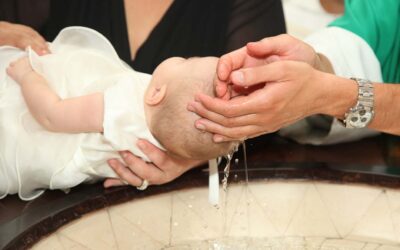
But the real task to which godparents promise is to ensure that the newly-baptised are supported in their Christian growth, by prayer, advice and example.

Praying Together 21st June 2026
‘You are of more value than many sparrows.’
Yes perhaps we are – but that doesn’t mean that sparrows have no value at all.

Praying Together 31st May 2026
Throughout the world, greeting one another with a kiss is a standard way of greeting – once, twice or more (four times in some regions of of France.) In our less demonstrative culture, we perhaps tend to ‘Share the peace’ by means of a nod, wave, handshake a hug or sometimes even a kiss itself in order to respect what we understand as the boundaries of a person’s ‘personal space’.