No Results Found
The page you requested could not be found. Try refining your search, or use the navigation above to locate the post.
2nd Sunday before Advent
Collect
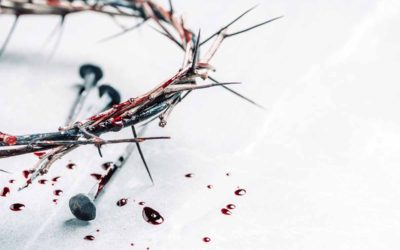
The letter to the Hebrews couldn’t be clearer. The old ritual as described in detail in the Old Testament, in which a jewel-bedecked and richly adorned priest spills animal blood on an altar, has been replaced by the one all-encompassing sacrifice of God’s Son. No jewels. No fine clothes. No altar – a rough -hewn piece of wood on which the Prince of Peace is the sacrificial offering seeking redemption.
However, while Christians accept that Christ’s sacrifice is complete and sufficient, the appropriate celebration of this issue remains as the cause of division between those of different denominations. Some, of a Catholic Persuasion (n.b. not just ‘Roman’ Catholic), regard the Bread as incorporating (either symbolically or in reality) the consecrated blood of Jesus, and elevate it from the Altar in the Eucharistic Prayer for all to recognise as a sacrifice we offer to God. In theological terms, this is called ‘Sacrificium’ (sacrifice).
In an opposing doctrine in more conservative Protestant Theology, around God’s Holy Table He offers His Son to us. This is referred to as ‘beneficium’ (gift giving), that is, a gift from God to the faithful rather than from the faithful to God. The celebration of thanksgiving for salvation takes place within the context of a meal, and we share bread and wine as memorial of His words at the Last Supper.
Sacrifice or memorial? Millions of words on the issue haven’t reached a resolution, and probably won’t ever. But the important point is that this must not – Must Not!!! – cause division between all who proclaim Jesus as Lord. However we understand it, it is the Spirit-led recognition of His presence at the heart of our Eucharist that changes our lives and sets us free to be His Body on earth.
Previous Posts
The page you requested could not be found. Try refining your search, or use the navigation above to locate the post.
3rd Sunday before Advent
Collect
People sometimes ask me why, since our multinational and multilingual service making the hundred years since the 1918 Armistice, I no longer wear a poppy on Remembrance Sunday. Sadly I don’t recognise any reduction in war and violence after years of wearing one. While respecting the choice of those who still do, I feel that yes, it was right then that we reflected and looked back in gratitude. But perhaps it is time to look forward instead.
Actually, I do wear one, sort of. But rather like the cross on my forehead I was blessed with on my Baptism, it’s only visible through my actions.
I aspire to living my life a witness to my Saviour (admittedly and shamefully, I mostly fail…). Nowadays, my act of Remembrance is in working for a future for children, grandchildren and generations of every race and nation to come, that they will live in a world of freedom from violence, hatred, injustice and prejudice. Whatever we wear or don’t wear, we must always, in giving thanks and honouring the sacrifice of those who give their lives for others, in turn offer ourselves as the body of Christ in the world, working for God’s Kingdom of peace and looking forward to that Kingdom, come. The safety and freedoms of the world’s children are our living poppies of remembrance
We remember
The Defence Forces
The Ambulance Service
An Garda Síochána
The Fire Service
The Coastguard
The RNLI and its volunteers
The Civil Defence and its volunteers
Nurses, doctors and all those who use their skills of healing both in this nation and across the world
And all those who have given their lives for others
Do not despair
For Johnny-head-in-air;
He sleeps as sound
As Johnny underground.
Fetch out no shroud
For Johnny-in-the-cloud;
And keep your tears
For him in after years.
Better by far
For Johnny-the-bright-star,
To keep your head,
And see his children fed.
John Pudney 1945
We pray the Lord’s prayer, and as the music plays, we may break bread together with the risen Christ and all His people – whoever and wherever in the world they are, we are one in Him who gave His life that we might live. He calls us to follow and to live our lives as His body, in the strength of the Holy Spirit.
The Lord bless you and keep you; the Lord make his face shine on you and be gracious to you; the Lord turn his face toward you and give you peace.”’
Go in peace, to love and praise the Lord and all His creation, giving thanks for the blessings of tomorrow – and the day after, then the day after that, and all your days. In the name of Christ. Amen
Previous Posts
The page you requested could not be found. Try refining your search, or use the navigation above to locate the post.
4th Sunday before Advent
Collect
There are a number of sacrifices prescribed in the Old Testament; a burnt offering to express devotion or commitment to God. a grain offering in the form of a cake or baked bread, the peace offering, which consisted of any unblemished animal from the worshiper’s herd, a sin offering to atone for sin and cleanse from defilement and a trespass offering given as atonement for sins that required reimbursement to an offended party . Each of these sacrifices involved certain elements, either animal or sometimes fruit of the field, and had a specific purpose. They had to be made in accordance with strict rules laid down in the book of Leviticus – and these instructions were mostly fairly gruesome, involving (blameless) animals being slaughtered, with their blood being a fundamental part of the act.
Essentially, they allowed the donor to walk away from their past and start again – without themselves shedding blood. No doubt many were sincere, resolving to change their lives for the better – but I suspect that for others, this was a meaningless ritual which changed nothing.
Paul’s letter to the Church in Corinth makes it clear that these are but ‘a shadow of the things that were to come; the reality, however, is found in Christ.’ Jesus offers himself as a final, all-encompassing sacrifice. His innocent blood replaces the blood of the innocent animals. It is all we need, and we celebrate our freedom in our eucharistic celebration. But does it change us? – or do we merely perform the ritual as part of a tradition, without reflecting on its true meaning – that God the Creator of the Universe, loves us so much that He offers us the blood of His only Son that we might not perish, but have eternal life?
This week, there is so much needing our prayer that words are not enough. We need to take our issues of concern to a much deeper level. So, if you are able, find a quiet space and simply meditate on the words below, in the context of Christ’s atoning Sacrifice
Flooding in Spain and all countries suffering extreme climate disturbance
Escalating war and the pursuit of revenge throughout the Holy Land
Continuing conflict in Ukraine and Russia
Desperate people worldwide seeking refuge and safety for their families
The growth of political extremism
Domestic abuse and violence
That the Kingdom is only ever to be found in love of God and neighbour.
We pray the Lord’s prayer, and as the music plays, we may break bread together with the risen Christ and all His people – whoever and wherever in the world they are, we are one in Him who gave His life that we might live. He calls us to follow and to live our lives as His body, in the strength of the Holy Spirit.
The Lord bless you and keep you; the Lord make his face shine on you and be gracious to you; the Lord turn his face toward you and give you peace.”’
Go in peace, to love and praise the Lord and all His creation, giving thanks for the blessings of tomorrow – and the day after, then the day after that, and all your days. In the name of Christ. Amen
Previous Posts
The page you requested could not be found. Try refining your search, or use the navigation above to locate the post.
it’s easier for a camel to go through a needle’s eye…
it’s easier for a camel to go through the eye of the needle…
It’s easier for a rope to go through the eye of a needle…
… than for the rich to get into God’s Kingdom


![]()
it’s easier for a camel to go through a needle’s eye…
it’s easier for a camel to go through the eye of the needle…
It’s easier for a rope to go through the eye of a needle…
… than for the rich to get into God’s Kingdom
Previous Posts
The page you requested could not be found. Try refining your search, or use the navigation above to locate the post.
LORD, we beseech thee, grant thy people grace to withstand the temptations of the world, the flesh, and the devil, and with pure hearts and minds to follow thee the only God; through Jesus Christ our Lord. Amen.
‘if anyone among you wanders from the truth’…
‘And what is truth?’, said Pilate, before walking away from it, quoted in John 18:38
‘To say of what is that it is, or of what is not that it is not, is true.’ That’s Aristotle.
‘Truth is what I say it is’ according to politicians and dictators through the ages
‘Er, search me’ said quite a lot of wise philosophers.
Do we have to define something to understand what it means in our daily lives? I would suggest that while a definition certainly often helps – but a definition isn’t always necessary. As an example, to survive. we have to breath something called ‘air’ – but we don’t have to know its chemical formula in order to do so. There is much more to life than hard facts, and in them, truth will exist in spirit.
What is important is that we perceive, accept and believe ‘truths’ in order to frame our decisions and actions. We base our lives on what we believe to be truth, and for us as Christians, Jesus’ word is all the truth we need to live in Him and act as His body on Earth. His truth is simple – it is Love. Love of God and Love of neighbour.
‘My word is truth’, said Jesus in John 17: 17. Pilate was afraid of the consequences of belief. Thankfully, we need not be.
Previous Posts
The page you requested could not be found. Try refining your search, or use the navigation above to locate the post.