
A Reflection provided by the Revd. Barbara Irrgang-Buckley
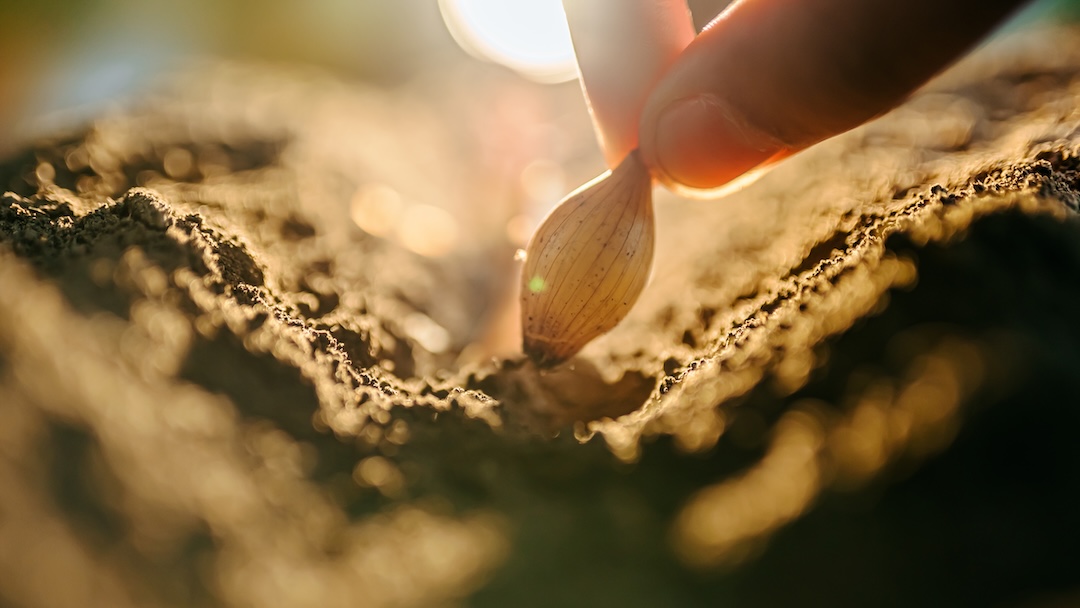
“Things great have small beginnings. Every downpour is just a raindrop; every fire is just a spark; every harvest is just a seed; every journey is just a step because without that step there will be no journey; without that raindrop there can be no shower; without that seed there can be no harvest.”
(William Wilberforce)
In the beginning there was nothing, and out of nothing you fashioned a universe so vast, so unimaginable that we can only sigh with amazement when we stare upwards on a star-lit night. And within this universe you positioned the earth and populated it, provided for it and designed for it to be a place of beauty.
Creator God, I thank you
In the beginning there was just potential; the seed within the packet, soil’s nutrients, sunshine’s warmth, rain clouds gathering. And within the tiny seed all that is our daily bread encoded, primed and ready should it be planted and allowed to grow.
Creator God, I thank you
In the beginning there was humankind, placed within your garden, made steward, gardener and caretaker of this place of beauty, given responsibilities and the capacity to enjoy. And yet among the seeds we have sown have been weeds and crops of our own choosing, which have not shown fruit or have spread and choked the earth.
Creator God, forgive me
Music
Locus iste a deo factus est (Anton Bruckner)
Locus iste a Deo factus est, inaestimabile sacramentum irreprehensibilis est.
This place is made by God, inestimably sacred, irreprehensible
Collect for the Harvest Festival
Creator God,
you made the goodness of the land,
the riches of the sea and the rhythm of the seasons;
we thank you for the harvest.
May we cherish and respect this planet,
and each other through Jesus Christ our Lord. Amen
Listen to this – Jubilate Deo
(… and maybe you could let me know if you like it!)
Reflection
Our God, who we call ‘Father’, cares for his creation. For us. We remember especially, but not only, on Harvest Thanksgiving, that we receive everything from his hand, that we are entirely depending on his creation. Somehow we tend to see his creation as something we are separate from. Yes, we depend, and we are asked to be stuarts of his creation. As if we were superior and to some degree in control of it. But despite our ability to greatly use and shape God’s creation, the environment around us, we are also part of it. We are subject to the creative powers and we are an expression of it.
We use and more so abuse creation to a degree, that we are destroying it and with this destruction, we are destroying what we are part of and depend on.
Oh how we would love to be able to say with confidence, what Joel said in the first verse of the reading.
‘Do not fear, O soil.’ Gods promise of great things to come…but we are doing much to kill off the soil, to poison it by industrial activities, modern farming and creation of polluting waste, to let it be taken by erosion and to seriously harm it in war related activities.
‘Do not fear, O soil,’ God was letting his people know through the prophet. And humanity turns this in ‘Do fear, O soil’.
One could lose hope and faith. Or one can make compost. Compost, to heal the soil and to help God’s wish for his creation, not to fear.
Our fellow creatures are mentioned by Joel. ‘Do not fear, O animals…’ God’s care for his creatures is clear. And yet, how do humans treat animals in general?
God must be in tears looking at us, and how we are abusing, neglecting and torturing animals. In most cases.
Yet we are promised fruit, food, rich harvests, as God chose us and cares for us.
We are grateful on Harvest Thanksgiving. But in general, do we appreciate God’s care and our dependency, but even more so our calling to mind and care for his creation? So that it doesn’t have to fear? Are we truly understanding and embracing our creative, loving, caring and giving God?
Jesus teaches us about our understanding of God, about our relationship to him in our Gospel reading.
We are invited to a wedding feast table. Whether this is the heavenly feast to come, when we will sit at the Lords table, or the Eucharist, or even the celebration of being in union with God already here on earth, Christ’s wedding with our soul: we hear about three different types of people who rejected the invitation.
The first type refers to his field. For him his possessions are more important than the meal.
If we put our possessions first, it is difficult or for God, to get access to our hearts.
The second type puts business and financial success before being united with Christ.
The third group of people in the story kills the King’s messengers. This is the Ego, that out of fear or out of unwillingness to give up control blanks out Gods voice calling us. Our ego doesn’t want to permit, that the meaning of life is, to find Christ.
Material possessions, greed and ego are obstacles and do not make us find God, In the story those three are killed by God.
And then, God invites all people, all of us, good and bad, to the wedding feast. And in accepting the invitation, good and bad, all souls want to come close to Christ, and Christ longes to feast in abundance with all of us.
Yet, to enter in this invitation and wedding with Christ the old clothes of our old selves need to be changed – we are offered the garment of God’s grace to become our new selves, and we need God’s grace to enter into this intimate and loving union.
Christ graciously invites us to feast with him, to get into a close relationship with him, and we all have the longing to draw close to him, to ‘marry Christ’.
‘Do not fear, O human, I invite you to be with me, and I want to be with you. And great things will happen, great fruit will grow, your lives will flourish,’ one could say, echoing Joel’s words on God’s creative provision.
In celebrating God’s creation and understanding , that we are part of his wonderful world, we understand that Christ, the Pantocrator, the Ruler of All, wants to marry his creation in us. In giving our materialism, greed and ego priority, we will not only ruin his creation but also reject Christs invitation. And therefore, celebrating Harvest Thanksgiving and truly embracing the creation and caring for it, is a foundation of joining Christ at his wedding feast with us.
Praying Together 31st May 2026
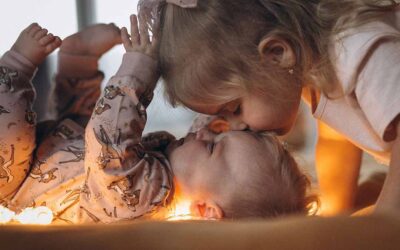
Throughout the world, greeting one another with a kiss is a standard way of greeting – once, twice or more (four times in some regions of of France.) In our less demonstrative culture, we perhaps tend to ‘Share the peace’ by means of a nod, wave, handshake a hug or sometimes even a kiss itself in order to respect what we understand as the boundaries of a person’s ‘personal space’.
Praying Together 17th May 2026
‘Somethin’s comin’, don’t know what it is, but it is gonna be great’

Praying Together 10th May 2026
This week I offer a report of our Archbishop John’s Introductory address to this week’s General Synod. It speaks for itself. I wish certain political leaders would read it too.

Praying Together 26th April 2026
Fortunately, God’s love is not restricted to those who do good. He sent His only Son to save sinners – whoever they may be, whatever they may have done wrong.
Praying Together April 19th 2026
Judgement is not restricted to either believers or non-believers – but All people
Praying Together 12th April 2026
Let’s talk about Peter, the ‘Rock’ on which Christ’s Church is built.
Seriously, would you have chosen him? Surely, one of the other Disciples would be the most highly qualified.
Praying Together Easter Sunday 2026
A Reflection provided by the Revd. Barbara Irrgang-Buckley for the First Sunday of Easter
Praying Together – A Thought for Good Friday 2026
Through our tears as we stand at the foot of the Cross and witness His Crucifixion on this Good Friday, we have the privilege of looking beyond the day unto a day of joy as we are assured of His life – then, today and tomorrow. We leave our past behind as we walk away from Golgotha, the place of the skull.
Praying Together March 29th 2026
These things are worth meditation and thought, as we enter this Holy Week – but the even more important question that we can only answer for ourselves, is embodied in twelve straightforward words written by Charles Wesley.
How can it be, That Thou, my God, shouldst die for me?

Praying Together 22 March 2026
“Lazarus, come out.” He calls Lazarus by name. Even death cannot triumph, and so it is with sin. There is no depth or distance to which human being can go that can prevent them from hearing that call. It is up to them to choose to accept or deny it.
Praying Together 15th March 2026
Simeon, though, didn’t just hear about the Messiah being incarnate in the child – he also knew that the child’s destiny would involve pain and suffering in order to fulfil His mission. And Mary knew too. The consolation of Israel – of the world – would cost her the life of her child.
Praying Together 8th March 2026
And in turn, we are challenged to become messengers ourselves, however unsuitable or ill-equipped we might feel.