

Meditation for Trinity 13 2025
Collect
Almighty God, who called your Church to bear witness that you were in Christ reconciling the world to yourself: Help us to proclaim the good news of your love, that all who hear it may be drawn to you; through him who was lifted up on the cross, and reigns with you and the Holy Spirit, one God, now and for ever.
Timothy 1: 12 – 17
I received mercy because I had acted ignorantly in unbelief…
Paul doesn’t try to justify his previous actions – blasphemer, persecutor, man of violence. He merely asserts that is deeds were performed out of ignorance of the truth of the incarnation of God’s only Son, Jesus, the promised Christ. Once he met with Jesus on the Damascus Road, he now knows that truth – and in accepting the Christ, through grace, his violent sinful past is left at the foot of the Cross.
Two questions, then. Is ignorance of the Law an excuse for the things people have done? In secular common law, the answer is no. The principle is ‘ignorantia juris non excusat’ – ‘ignorance of the law is no excuse.’
This is reflected in the Old Testament: Leviticus 5:17: “And if any one sin, and do any of the things which Jehovah hath commanded not to be done; though he knew it not, yet is he guilty, and shall bear his iniquity
And in the New Testament: Romans 1:18-20 provides a foundational text for this doctrine: “… since the creation of the world God’s invisible qualities—His eternal power and divine nature—have been clearly seen, being understood from what has been made, so that people are without excuse.”
Paul admits he should have known better, but it took the dramatic Damascus Road experience to convict him.
There is no excuse, he says – God is visible in all creation, and we know it if we simply look around us. This is called ‘natural law’. Encyclopaedia Brittanica: ‘Natural law is a philosophical concept that refers to a system of right or justice believed to be morally universal and inherent to human nature, rather than established by societal rules or positive law.’ In other words, we know right from wrong. We don’t have to be told.
This is different to ‘positivist law’ – a set of rules laid down by an authority (religious or secular) which have no integral moral base and are accepted by the society they lead whether just or unjust.
Paul realised that positivist obedience to the human-derived interpretation of the Commandments will never result in salvation. He became aware that he had sinned and was called to repent and ask forgiveness. Like him, we know that the gift of freedom comes only through Christ and the Cross He climbs. The past is past. We walk away from the tomb into freedom. Every time we fail. But then we are given the opportunity to start again.
The second question is more difficult. So, if you are not ‘ignorant’ any longer, if you know the truth but continue to sin, what are the consequences? Are you refusing the free gift of Grace? And if you refuse it, what happens? Dramatic as literary depictions of the fiery furnace of hell might be, I don’t think they describe the reality. Instead, I believe that hell is the consequence of you choosing to be locked out of God’s love, for eternity – finally knowing the truth and realising it’s too late to change your mind. You had your opportunities – many opportunities – in your earthly life. It didn’t matter what you had been, said or done – like Paul, you were given the chance to repent. You didn’t.
Previous Posts

Praying together 28th January 2024
So, says Paul, eat or don’t eat. Stop making a fuss over things that don’t matter, and get on with loving your neighbour.
Praying Together 21st January 2024
as we celebrate this week of Christian Unity, let us consider what service we could offer together, that we wouldn’t be capable of achieving on our own – the whole being much greater than the parts.
Praying Together January 14th 2024
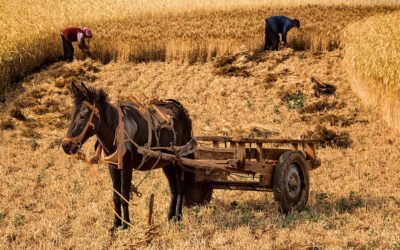
Plough Sunday has its roots in medieval times, when the parish church was often used to store a communal plough in the winter months, then being decorated and blessed before the rhythm of the agricultural season begins once more on Plough Monday

Praying Together 7th January 2024
When the world looks at us, sees our actions, our life, do we reflect the light of Christ, and further His Kingdom? Or do we deepen the darkness?

Praying Together 31st December 2023
Jesus – the revolutionary terrorist according to the Sanhedrin – is different, however, in one unique regard.
His only weapon is love.
Even for enemies.
Which is how His Victory is won.

Praying Together 25th December 2023
Without the crib, there is no cross.
Without the cross, the crib has no meaning.
Unto us a child is born…
… a Saviour who is Christ the Lord.

Praying Together 17th December 2023
May you walk in His light throughout your life; may you be His body on earth, share Faith, Hope and Love, and use the all the gifts He gives you to bring His Kingdom in.

Praying Together 26 November 2023
They know what they should do. But they don’t do it. It is the ones who do God’s work, who serve without expecting any reward who will receive eternal life in the Kingdom.
Praying Together 19th November 2023
It might not be the trumpet. Or the Clarinet. A Trombone, Double Bass, a singing voice. It may not be music at all. If not, there are many other skills you may have been given that you are not yet aware of: artistic talent, hospitality, compassion, intercession, forgiveness, unconditional love. There will be some.

Praying Together 12th November 2023
Darkness cannot drive out darkness; only light can do that. Hate cannot drive out hate; only love can do that.

Praying Together 5th November 2023
“Do as I say, not as I do”. The mantra of hypocritical leaders through the ages. It is important to note that Jesus makes a clear distinction between the righteous observance of the Law and the self-important practice of the Pharisees.

Praying Together 29th October 2023
Hallowmas is a season we should not ignore, but instead celebrate as a festival of light, in the beauty of Autumn colours and enjoying a time for creation to rest in peace.