

Meditation for Trinity 10 2025
Hebrews 12: 18 – 29
You have not come to something that can be touched, a blazing fire, and darkness, and gloom, and a tempest, and the sound of a trumpet, and a voice whose words made the hearers beg that not another word be spoken to them. (For they could not endure the order that was given, ‘If even an animal touches the mountain, it shall be stoned to death.’ Indeed, so terrifying was the sight that Moses said, ‘I tremble with fear.’)
But you have come to Mount Zion and to the city of the living God, the heavenly Jerusalem, and to innumerable angels in festal gathering, and to the assembly of the firstborn who are enrolled in heaven, and to God the judge of all, and to the spirits of the righteous made perfect, and to Jesus, the mediator of a new covenant, and to the sprinkled blood that speaks a better word than the blood of Abel.
See that you do not refuse the one who is speaking; for if they did not escape when they refused the one who warned them on earth, how much less will we escape if we reject the one who warns from heaven! At that time his voice shook the earth; but now he has promised, ‘Yet once more I will shake not only the earth but also the heaven.’ This phrase ‘Yet once more’ indicates the removal of what is shaken—that is, created things—so that what cannot be shaken may remain. Therefore, since we are receiving a kingdom that cannot be shaken, let us give thanks, by which we offer to God an acceptable worship with reverence and awe; for indeed our God is a consuming fire.
Luke 13: 29 – 10: 17
Now he was teaching in one of the synagogues on the sabbath. And just then there appeared a woman with a spirit that had crippled her for eighteen years. She was bent over and was quite unable to stand up straight. When Jesus saw her, he called her over and said, ‘Woman, you are set free from your ailment.’ When he laid his hands on her, immediately she stood up straight and began praising God. But the leader of the synagogue, indignant because Jesus had cured on the sabbath, kept saying to the crowd, ‘There are six days on which work ought to be done; come on those days and be cured, and not on the sabbath day.’ But the Lord answered him and said, ‘You hypocrites! Does not each of you on the sabbath untie his ox or his donkey from the manger, and lead it away to give it water? And ought not this woman, a daughter of Abraham whom Satan bound for eighteen long years, be set free from this bondage on the sabbath day?’ When he said this, all his opponents were put to shame; and the entire crowd was rejoicing at all the wonderful things that he was doing.
Tick-in-the-box religion or love-in-action?
For the most part, the Epistle to the Hebrews does more or less what it says on the tin – but it isn’t addressed to every Israelite, only those who have accepted Jesus as the Messiah. In order for them to gain a deeper insight into their new faith, it explains the doctrinal difference between the Old and New Covenants, and assumes a knowledge of the former on which to base the Christian understanding of God’s relationship with His people. It has been suggested (slightly tongue in cheek, but quite accurately), that the Book of Hebrews was written by a Hebrew to other Hebrews telling the Hebrews to stop acting like Hebrews. It rejects ‘religion’ in its discussion of faith and salvation – that gift comes through grace alone. In today’s readings, it talks about two mountains.
Sinai represents the unapproachable Old Covenant Mountain, on which God gives to Moses the series of laws by which Israel is commanded to live. But it shows that it is demonstrably impossible to live by the law in itself and thus achieve salvation – humans, however pious, are still subject to sin and tremble with fear as they realise the power of the untouchable and unclimbable mountain.
Instead, through Christ, the mountain we are offered is Zion – The New Covenant home, established through the life, death, and resurrection of Jesus Christ, characterised by the internalization of God’s laws and obedience to the simple commandment to love God and our neighbour as we are loved through Christ.
Luke’s story of the healing of the crippled woman shows the significance of this difference in action. The leader of the synagogue wants to get a tick in the box; Jesus wants to heal. That isn’t to say the Priest is being malevolent – probably, he sincerely feels that Jesus is committing a rebellious – if not even blasphemous – act, that risks undermining his authority and position in the social hierarchy. He is only being true to his belief in the Mosaic Law as the foundation of Jewish society. Unfortunately, that belief has in itself become an idol, an object of worship, a closed-mind barrier to the truth. He can’t – won’t – hear Jesus. His hypocritical behaviour goes back to those Israelites in the foothills of Sinai who persuaded Aaron to make a metal image of a calf for their worship, causing Moses to shatter the stone tablets holding the commandments which God had given him. Through the ages, the story is the same – people want a god of their own design, with empty ‘religious’ rituals they can perform and then get on with their life, rather than the simple (but at the same time difficult) command to put love into action – a life not of religious prestige, but continuous humble service.
A human-designed religion doesn’t work in achieving salvation. Human nature and human sin renders it impossible. Salvation does not ever come through religious practice – it comes through Christ, the only sinless one, whose sacrifice is given as a free gift in love, to those who can’t help themselves. All He asks is that we are open to respond to His word in penitence and faith, and then His amazing Grace lifts us to the Mountain peak from which we go forth as Christ’s body to heal a broken world.
N.B. In the epistle, the angel-accompanied ascent to Mount Zion – the Heavenly Jerusalem – is not to be confused with ‘Zionism’, a political movement dating from the late nineteenth century which aspires to combine secular nationalism and religious conservatism in order to create an exclusively Jewish homeland.
Previous Posts

Praying Together 4th February 2024
He asks for no reward, save that of loving His creation, His Father and our neighbours (all of them) as He loves – do we even do that?

Praying together 28th January 2024
So, says Paul, eat or don’t eat. Stop making a fuss over things that don’t matter, and get on with loving your neighbour.
Praying Together 21st January 2024
as we celebrate this week of Christian Unity, let us consider what service we could offer together, that we wouldn’t be capable of achieving on our own – the whole being much greater than the parts.
Praying Together January 14th 2024
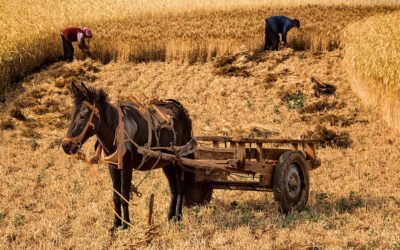
Plough Sunday has its roots in medieval times, when the parish church was often used to store a communal plough in the winter months, then being decorated and blessed before the rhythm of the agricultural season begins once more on Plough Monday

Praying Together 7th January 2024
When the world looks at us, sees our actions, our life, do we reflect the light of Christ, and further His Kingdom? Or do we deepen the darkness?

Praying Together 31st December 2023
Jesus – the revolutionary terrorist according to the Sanhedrin – is different, however, in one unique regard.
His only weapon is love.
Even for enemies.
Which is how His Victory is won.

Praying Together 25th December 2023
Without the crib, there is no cross.
Without the cross, the crib has no meaning.
Unto us a child is born…
… a Saviour who is Christ the Lord.

Praying Together 17th December 2023
May you walk in His light throughout your life; may you be His body on earth, share Faith, Hope and Love, and use the all the gifts He gives you to bring His Kingdom in.
Praying Together 26 November 2023
They know what they should do. But they don’t do it. It is the ones who do God’s work, who serve without expecting any reward who will receive eternal life in the Kingdom.
Praying Together 19th November 2023
It might not be the trumpet. Or the Clarinet. A Trombone, Double Bass, a singing voice. It may not be music at all. If not, there are many other skills you may have been given that you are not yet aware of: artistic talent, hospitality, compassion, intercession, forgiveness, unconditional love. There will be some.

Praying Together 12th November 2023
Darkness cannot drive out darkness; only light can do that. Hate cannot drive out hate; only love can do that.
Praying Together 5th November 2023
“Do as I say, not as I do”. The mantra of hypocritical leaders through the ages. It is important to note that Jesus makes a clear distinction between the righteous observance of the Law and the self-important practice of the Pharisees.