

A Reflection for Sunday 2nd November 2025
provided by Reverend Barbara Irrgang-Buckley
Jesus said to him, ‘Today salvation has come to this house, because he too is a son of Abraham.
Hymn Put all your trust in God (Wesley)
Collect
you have kindled the flame of love in the hearts of the saints:
Grant to us the same faith and power of love,
that, as we rejoice in their triumphs,
we may be sustained by their example and fellowship;
through Jesus Christ our Lord.
2 Thessalonians 1: 1-4, 11-12
In Jesus’ time tax collectors were not popular and were commonly regarded as sinners. Tax collectors worked for the Romans, the occupying force in Palestine at the time. They collected taxes from people to give to the Romans and were regarded as traitors. Most people resented the Romans and did not want to pay taxes to them.
Tax collectors were not paid a wage. They were expected to pay their own wages by taking extra money from people. Such a system was open to exploitation and tax collectors had a reputation for being very dishonest. They often became rich at the expense of those they collected taxes from.
Zacchaeus was especially unpopular as he was a chief tax collector in Jericho and a wealthy man. However, he must have realised that his life needed to change, and he was determined to see Jesus – even though this meant climbing a tree.
By inviting himself to Zacchaeus’ house, Jesus showed his acceptance of someone who was regarded as a sinner and treated as an outcast. The crowd did not approve of Jesus’ controversial action.
Zacchaeus showed he was willing to change by offering half of his belongings to the poor and paying back four times as much to anyone he had cheated. This amount was what the Old Testament law demanded as a repayment for dishonesty.
Jesus’ final comment highlights that although he has brought salvation for all people, those who are sinners are most urgently in need of this message. It is wrong to think he is only interested in so-called ‘respectable’ people.
This story is a story of God’s desire to save sinners; it is a story of hope and encouragement to recognize change. It is also a story which highlights that God reaches for people outside institutionalised and exclusive religion, of which humans try to take ownership and power. It is God who recognises the seeker and who makes his way into the lives of the ones who are seen as outcasts. It is God who brings salvation to the faithful sinner, not the people who try to determine through power who is ‘on their side’ and who is an outcast.
One could ask, who are the people in Zacchaeus’ place today if the story was told again in our time? And how would we respond?
And some more music, in the spirit of Reformation Day which was on October 31st:
Hymn ‘A mighty fortress is our God’ in German and English

The same but as Cantata by Bach (BWV 80)
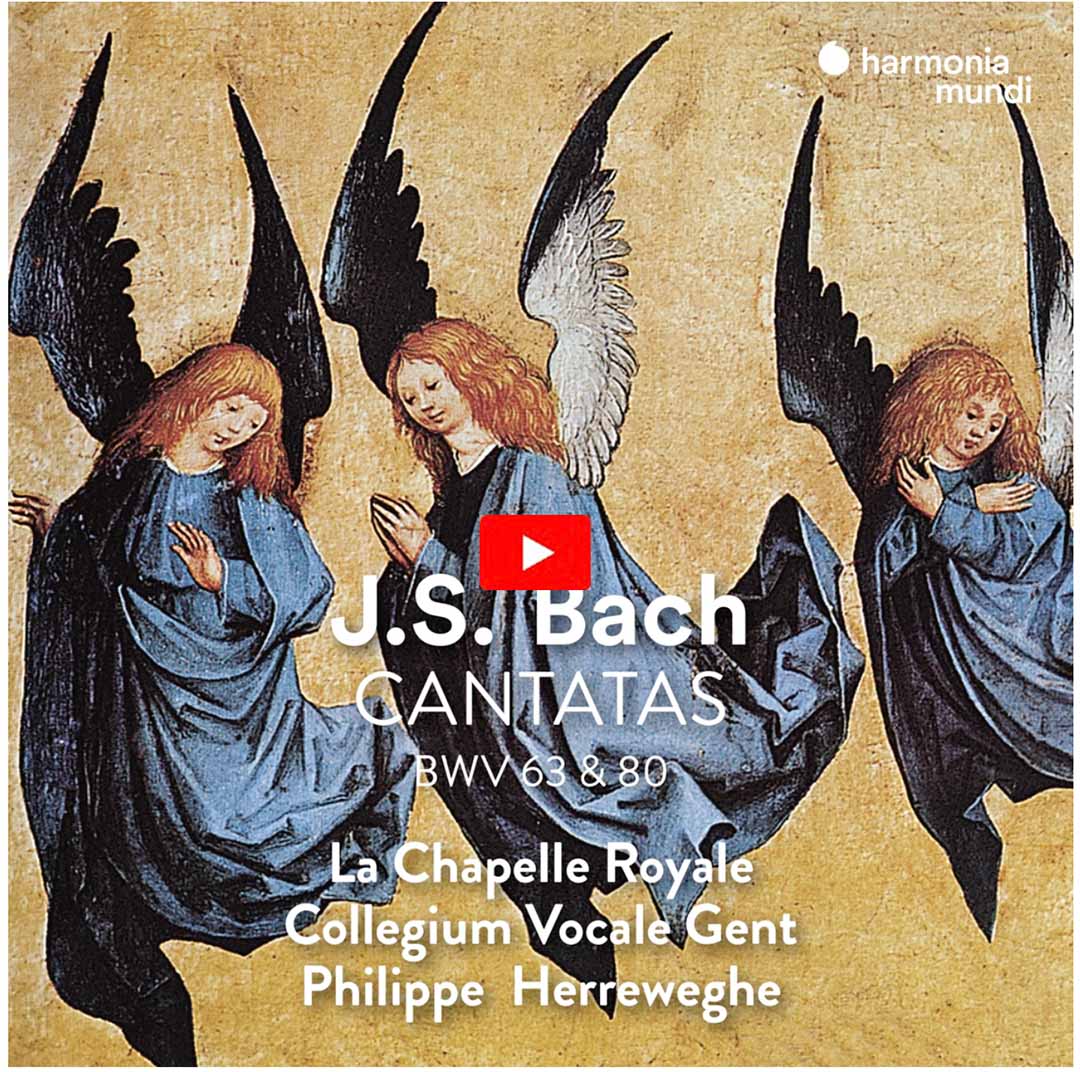
And finally, if you ever wanted to know more about this hymn…
Martin Luther’s Hymn: Bach’s BWV 80 “A Mighty Fortress is our God” Explained

Previous Posts

Praying Together 22nd February 2026
If we are to appreciate the gentleness of a lamb, we need to know its opposite. If we are to understand what safety is, we need also to experience the possibility of danger.

Praying Together 15th February 2026
Perhaps, when we pray, we need to remember it is the Jesus on the Mountain to whom we address our prayers, the one whose face shines like the sun and transfigures our faces as we radiate in His light.

Praying Together February 8th 2026
Is Jesus suggesting, not to eat and drink? And is he saying we should not wear clothes but go naked?
How unrealistic is this, and how depressing – we need to eat and drink, and we need clothing.

Praying Together February 1st 2026
Christ’s words are given to all His people in the face of the difficulties we ourselves face in life. We claim them and are assured of Blessing. And that is all we need.

Praying Together January 25th 2026
For the message about the cross is foolishness to those who are perishing, but to us who are being saved it is the power of God.

Praying Together 18th January 2026
In prayer, we ask: Who is God calling to come and use their specific individual gifts to continue to build His Kingdom in the future?
His reply is clear.
“You”, He says.

Praying Together 11 January 2026
Let the little children come to me, and do not hinder them, for the kingdom of heaven belongs to such as these.
Praying Together 21st December 2025
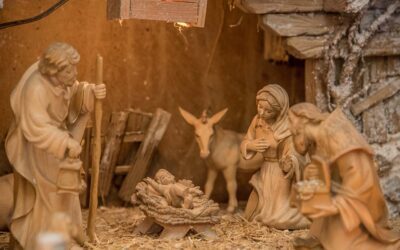
Joseph’s example is one of love, human reaction, vocation and ultimate obedience to his Creator. So we rightly celebrate both Mary and Joseph as the chosen parents of the Christ-child. But we must also remember that they were ordinary people with human emotions who lived extraordinary lives.

Praying Together December 7th 2025
By your grace we have the gift of the Scriptures. With the help your grace, may we listen deeply to what you want to say to each one of us. May we know your gifts of endurance, encouragement and hope, so that not only our lips but also our lives may be a song in praise of your mercy.

Praying Together November 30th November 2025
The significance of the Themes and Candles we light during the Advent Season.

Praying Together 23rd November 2025
We celebrate the beginning of the story in Advent – but before we do, it is equally important to celebrate the final act of Coronation. The Gospel proclaims that Jesus is King.

Praying Together 16th November 2025
In ways, the Christian Journey is like a race – a Marathon, not a sprint. The key is endurance, Jesus says. There will be mountains to climb, tears and heartache in the depths of your soul, and it will sometimes feel like it’s impossible to carry on. But the world will continue, and end only in God’s good time.