
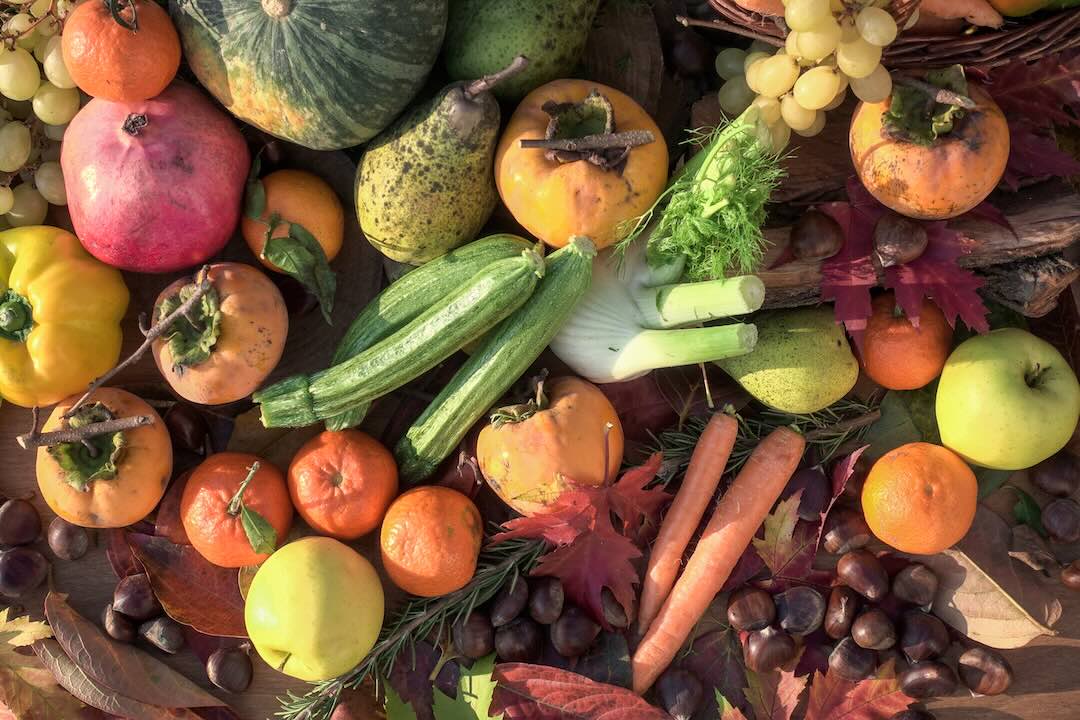
A Meditation for Trinity 18 – Harvest 2026
Collect
Joel 2: 21-27
21 Do not be afraid, land of Judah; be glad and rejoice. Surely the Lord has done great things!
22 Do not be afraid, you wild animals, for the pastures in the wilderness are becoming green. The trees are bearing their fruit; the fig tree and the vine yield their riches.
23 Be glad, people of Zion, rejoice in the Lord your God, for he has given you the autumn rains because he is faithful. He sends you abundant showers, both autumn and spring rains, as before.
24 The threshing floors will be filled with grain; the vats will overflow with new wine and oil.
25 “I will repay you for the years the locusts have eaten— the great locust and the young locust, the other locusts and the locust swarm—my great army that I sent among you.
26 You will have plenty to eat, until you are full, and you will praise the name of the Lord your God, who has worked wonders for you; never again will my people be shamed.
27 Then you will know that I am in Israel, that I am the Lord your God, and that there is no other; never again will my people be shamed.
Reflection
The Prophet is speaking to a people who are living under threat of famine and drought caused by a plague of locusts. The earlier Chapters of Joel’s prophecy are a call for the people to repent, for they have strayed far away from the Lord, and as a result, the locusts have destroyed the land. Joel calls on them to repent, then the evil doers will be punished and the penitent will be saved. With repentance will come the harvest.
However, given the various enemies of Judah; Babylon, the Medes and Persians, not to mention the corruption of some of its leaders themselves, it is reasonable to understand the prophet referring not to insects but humans, and relevant to New Testament stories of persecution by Greeks, Romans and legalistic religious hierarchies.
Going further, and clearly in our own times, the human locust swarm threatens to destroy everything in its way. We live in a time of the growth of extremist political philosophies and associated leadership to an extent reminiscent of the Nineteen Thirties; climate change and ensuing increasingly severe weather; uncontrolled (and possibly uncontrollable) technological ‘progress’; a society driven by ‘money’ rather than ‘wealth’; and the resurgence of sectarian, racist, misogynistic and unaddressed toxic domestic and gender-based violence.
It is hard to see God’s love for His people in all of this – or is it?
Depends on where we look.
We can withdraw into our comfort blankets and pretend that the locusts will just fly away – or we can choose to be grateful that we have a saviour whose ultimate victory is certain, and celebrate our life as free children of our Creator God.
We do so by giving thanks for the gift of our harvest by decorating our churches, by giving thanks for God’s response to our prayers at ploughing and growing, most of all by giving thanks by living as Christ’s body on Earth and refusing to be silent when we see hatred and injustice in the world around us. We choose love, and the locusts will fail in their intention to destroy the beauty of the earth – instead they will wither and perish
Through Christ, we have a harvest of life. Let us use it for His glory.
The Road to Emmaus | Luke 24: 13-35
The Road to Emmaus : Luke 24:13-35
Mary’s Story
Hello little one. Pleased to meet you. It’s been an eventful few months while I’ve been waiting for you to arrive. Let me tell you all about it.
It started on an ordinary day. I was going about as normal, feeding the chickens, tidying up and that sort of thing. I wasn’t really concentrating, I was thinking about my wedding to Joseph in a few weeks time.

The Journey to the Cross
The Lent readings tell a familiar story. The story of a journey. A journey to the cross.
Let’s remind ourselves of that journey. After his baptism, Jesus went into the wilderness for forty days and forty very cold nights. The voices of Satan came whispering, tempting, but Jesus refuses to be distracted or tempted.