Rev Michael Cavanagh +353 (0)87 160 6312
Praying Together 12th October 2025

Praying Together 12th October 2025

So the commandment is a challenge. To love those who betray you. Those who jeer. Those who wield the whips embedded with flint, hammer in the nails, pierce your side.

A Meditation for Trinity 17 2025

Collect

Almighty God, you have made us for yourself, and our hearts are restless till they find their rest in you:
Teach us to offer ourselves to your service, that here we may have your peace,
and in the world to come may see you face to face; through Jesus Christ our Lord.

Luke 17: 11-19

On the way to Jerusalem Jesus was going through the region between Samaria and Galilee. As he entered a village, ten lepers approached him. Keeping their distance, they called out, saying, ‘Jesus, Master, have mercy on us!’ When he saw them, he said to them, ‘Go and show yourselves to the priests.’ And as they went, they were made clean. Then one of them, when he saw that he was healed, turned back, praising God with a loud voice. He prostrated himself at Jesus’ feet and thanked him. And he was a Samaritan. Then Jesus asked, ‘Were not ten made clean? But the other nine, where are they? Was none of them found to return and give praise to God except this foreigner?’ Then he said to him, ‘Get up and go on your way; your faith has made you well.

Hands up if you enjoyed receiving Christmas and Birthday presents when you were a child. Keep your hands up if you enjoyed writing Thankyou letters afterwards.

Thought so.

It’s much easier now than it used to be. If you search the Internet for Children’s Thankyou letters, you will be presented with lots of templates to print out.

The sincerity is profound and genuine – Not. I wouldn’t be surprised if were possible to also include a digital signature or buy a rubber stamp with your name on to save the trouble of finding a pen.

And if your Mum didn’t keep reminding you (with increasing menace), you probably just conveniently forgot. Yes, I do speak from experience.

You have to wonder if forgetting to say thank you (and mean it) is part of human nature. It was certainly the case in Biblical times. We read about the healing of the ten lepers whose miserable life was restored to a place in Society by Jesus, and it’s no wonder that they rejoiced when they were pronounced clean by the Priest – and it’s also no surprise that they were so excited that they forgot to thank their healer. Only one bothered – and he was a Samaritan! An outcast, not even a Jewish Galilean, but an alien.

We live in comfort, in safety, in freedom, accepted in our community. I wonder how often we send a Thank you to the One who sets us free? Or do we just take it for granted that Grandma will always buy us nice presents whether we ever handwrite a thank you letter or not?
Previous Posts

Praying Together 5th October 2025

Praying Together 5th October 2025

So the commandment is a challenge. To love those who betray you. Those who jeer. Those who wield the whips embedded with flint, hammer in the nails, pierce your side.

The apostles said to the Lord, ‘Increase our faith!’

Collect

O Lord,
Hear the prayers of your people who call upon you;
and grant that they may both perceive and know
what things they ought to do,
and also may have grace and power faithfully to fulfil them;
through Jesus Christ our Lord.

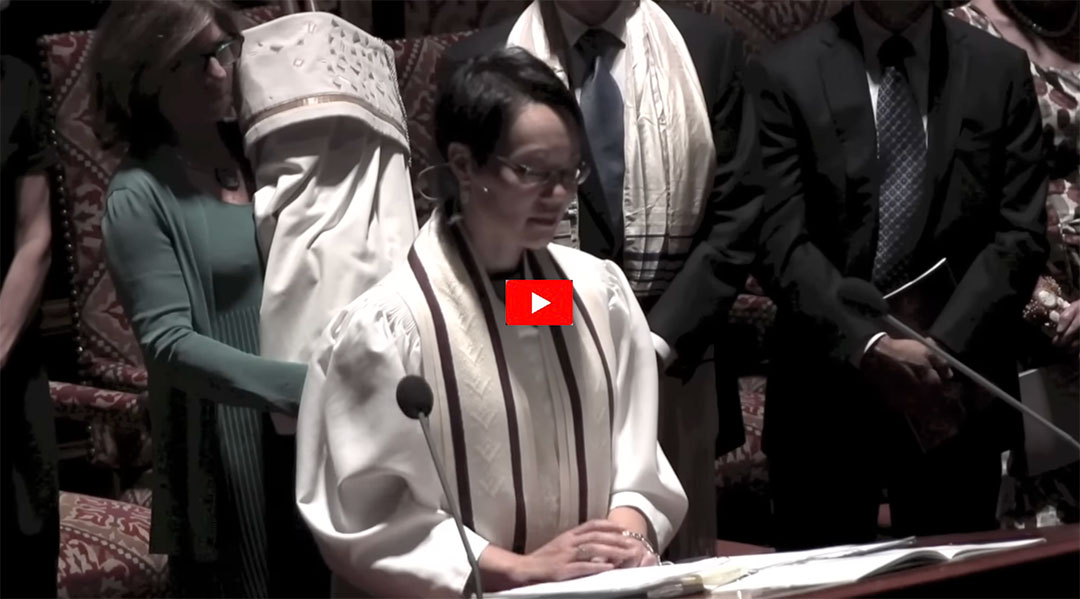
Kol Nidrei, sung by Rabbi Angela Buchdahl, Central Synagogue Manhattan

First Reading – Lamentations 1: 1-6

1How lonely sits the city that once was full of people!
How like a widow she has become, she that was great among the nations!
She that was a princess among the provinces has become a vassal.

2 She weeps bitterly in the night, with tears on her cheeks;
among all her lovers she has no one to comfort her;
all her friends have dealt treacherously with her, they have become her enemies.

3 Judah has gone into exile with suffering and hard servitude;
she lives now among the nations, and finds no resting-place;
her pursuers have all overtaken her in the midst of her distress.

4 The roads to Zion mourn, for no one comes to the festivals;all her gates are desolate, her priests groan; her young girls grieve,*and her lot is bitter.

5 Her foes have become the masters, her enemies prosper,
because the Lord has made her suffer for the multitude of her transgressions;
her children have gone away, captives before the foe.

6 From daughter Zion has departed all her majesty.
Her princes have become like stags that find no pasture;
they fled without strength before the pursuer.

1How lonely sits the city that once was full of people!
How like a widow she has become, she that was great among the nations!
She that was a princess among the provinces has become a vassal.

2 She weeps bitterly in the night, with tears on her cheeks;
among all her lovers she has no one to comfort her;
all her friends have dealt treacherously with her, they have become her enemies.

3 Judah has gone into exile with suffering and hard servitude;
she lives now among the nations, and finds no resting-place;
her pursuers have all overtaken her in the midst of her distress.

4 The roads to Zion mourn, for no one comes to the festivals;all her gates are desolate, her priests groan; her young girls grieve,*and her lot is bitter.

5 Her foes have become the masters, her enemies prosper,
because the Lord has made her suffer for the multitude of her transgressions;
her children have gone away, captives before the foe.

6 From daughter Zion has departed all her majesty.
Her princes have become like stags that find no pasture;
they fled without strength before the pursuer.

Thomas Tallis: Lamentations of Jeremiah I, Festival Alte Musik Zürich (8min)

Psalm 137

1  By the waters of Babylon we sat down and wept, ♦︎
when we remembered Zion.

2  As for our lyres, we hung them up ♦︎
on the willows that grow in that land.

3  For there our captors asked for a song, our tormentors called for mirth: ♦︎
 ‘Sing us one of the songs of Zion.’

4  How shall we sing the Lord’s song ♦︎
in a strange land?

5  If I forget you, O Jerusalem, ♦︎
let my right hand forget its skill.

6  Let my tongue cleave to the roof of my mouth if I do not remember you,
if I set not Jerusalem above my highest joy.

Arvo Pärt :  By the rivers of Babylon, there we sat and wept

Second Reading – 2 Timothy 1: 1-14

1Paul, an apostle of Christ Jesus by the will of God, for the sake of the promise of life that is in Christ Jesus,

2 To Timothy, my beloved child:
Grace, mercy, and peace from God the Father and Christ Jesus our Lord.

3 I am grateful to God—whom I worship with a clear conscience, as my ancestors did—when I remember you constantly in my prayers night and day. 4Recalling your tears, I long to see you so that I may be filled with joy. 5I am reminded of your sincere faith, a faith that lived first in your grandmother Lois and your mother Eunice and now, I am sure, lives in you. 6For this reason I remind you to rekindle the gift of God that is within you through the laying on of my hands; 7for God did not give us a spirit of cowardice, but rather a spirit of power and of love and of self-discipline.

8 Do not be ashamed, then, of the testimony about our Lord or of me his prisoner, but join with me in suffering for the gospel, relying on the power of God, 9who saved us and called us with a holy calling, not according to our works but according to his own purpose and grace. This grace was given to us in Christ Jesus before the ages began, 10but it has now been revealed through the appearing of our Saviour Christ Jesus, who abolished death and brought life and immortality to light through the gospel. 11For this gospel I was appointed a herald and an apostle and a teacher,* 12and for this reason I suffer as I do. But I am not ashamed, for I know the one in whom I have put my trust, and I am sure that he is able to guard until that day what I have entrusted to him.* 13Hold to the standard of sound teaching that you have heard from me, in the faith and love that are in Christ Jesus. 14Guard the good treasure entrusted to you, with the help of the Holy Spirit living in us.

Gospel Reading – Luck 17: 5-10

5 The apostles said to the Lord, ‘Increase our faith!’ 6The Lord replied, ‘If you had faith the size of a* mustard seed, you could say to this mulberry tree, “Be uprooted and planted in the sea”, and it would obey you.

7 ‘Who among you would say to your slave who has just come in from ploughing or tending sheep in the field, “Come here at once and take your place at the table”? 8Would you not rather say to him, “Prepare supper for me, put on your apron and serve me while I eat and drink; later you may eat and drink”? 9Do you thank the slave for doing what was commanded? 10So you also, when you have done all that you were ordered to do, say, “We are worthless slaves; we have done only what we ought to have done!” ’

Collect of the Word

Faithful God, have mercy on us your unworthy servants,
and increase our faith, that, trusting in your Spirit’s power
to work in us and through us, we may never be ashamed to witness to our Lord
but may obediently serve him all our days;
through Jesus Christ our Lord, who lives and reigns with you
in the unity of the Holy Spirit, one God, for ever and ever.

Reflection

The cry of the disciples to the Lord, “increase our faith,” resonates very
much with us today. Is being a person of faith harder today than it has ever been?
In one sense no: previous generations too had to struggle. Looking back at Old Testament times, I try to imagine what faith struggles the people of Israel had to endure. Our first reading from the Lamentations of Jeremiah and the Psalm tell us about the hardship, pain and loss, including loss of their faith, during the Babylonian captivity. Jerusalem lay in ruins, people were displaced, enslaved and had to make this long and hard journey in an unknown future. Generations of Israelites were traumatised by this experience. In Jewish history, this wasn’t going to be their only exile – many more years of having to migrate and of being dispersed were to come. How did they keep their faith, one wonders? Despite all various traditions and differences in religious teachings, the sense of belonging to a faith community was kept alive. Religious holidays, communal ceremonies, prayers and festivities were and still are held high, whether in worship in synagogue or in rituals in the family home. Community is as central to Jewish faith now as it was then. And it gets renewed and passed on from generation to generation by a desire for God and by practice of prayer and rituals.

How strong their faith must be.

For Christians faith also had and still has its challenges. I am thinking of the very early Christians, in our Gospel Reading they were in fact still Yews. They must have felt that their faith was very small and fragile, not strong enough to face the challenges of spreading Jesus’ teachings in a hostile and dangerous environment. Jesus reminds them to take the approach of slaves, of servants, and to basically plough on. Doesn’t the idea, wanting to first have a faith ‘big enough for everything’ before going out there and being a strong Christian, sound familiar? But faith grows by a desire for God, by practicing prayer and prayerful practice.

 Some decades later, Paul writes in the second letter to Timothy about upholding the faith. Christians at the time often faced persecution, imprisoning and death for openly practicing their faith. Also they might have been ridiculed for it. Hence the idea of being ashamed for ones faith. Paul reminded them as much as us that God did not give us a spirit of cowardice, but rather a spirit of power and of love and of self-discipline. And in this spirit Christians ploughed on.
Even today faith has its particular challenges. For the most part, public discourse is against faith in general and against church in particular. It would be easy to lose heart. On the other hand, faith is instrumentalized as a tool of power. One think of white supremacism, going hand in hand with homophobia, misogyny and justification of oppression, terror and even war.

Keeping the faith, Christs faith of servanthood, compassion and love can be hard enough, not to mention growing!! But let us remember we grow in faith by desire and by practice—desire for God and the practice of prayer. The present times again call us to focus on the heart of the Christian project—Jesus and the Gospel—and on the heart of prayerful practice, of discipleship—love and service.  In community we can support each other in love and fellowship and build one another up. And plough on. For God did not give us a spirit of cowardice, but rather a spirit of power and of love and of self-discipline.

PRAYER

God, our loving and faithful creator, remind us of the spirit you gave us, the spirit of power and love. Trusting in this is enough to get us moving.
In times of self-doubt and scepticism, in times of lack of trust, touch our hearts so that we do not give up. Even a small bit of faith gives us strength to serve your purpose, and by ploughing on, we will grow in faith.

We thank you for giving us your son as guide and loving teacher, and for community, your church, where we can find belonging and a spiritual home.

We thank you for being our rock of salvation. For being invited to return to you, no matter of failing or shortcoming. Your faith and trust in us, and your love for us make us strong and keep us serving you and your people.

We pray this in the name of our Lord Jesus Christ, our Saviour, who lives and reigns with you, now and for ever. Amen.

Previous Posts

Praying Together 28th September 2025

Praying Together 28th September 2025

So the commandment is a challenge. To love those who betray you. Those who jeer. Those who wield the whips embedded with flint, hammer in the nails, pierce your side.

Meditation for Trinity 15 2025

Collect

God, who in generous mercy sent the Holy Spirit upon your Church in the burning fire of your love: Grant that your people may be fervent in the fellowship of the gospel; that, always abiding in you, they may be found steadfast in faith and active in service; through Jesus Christ our Lord.

1 Timothy 6:6: 10, 11-19

Of course, there is great gain in godliness combined with contentment; for we brought nothing into the world, so that we can take nothing out of it; but if we have food and clothing, we will be content with these. But those who want to be rich fall into temptation and are trapped by many senseless and harmful desires that plunge people into ruin and destruction. For the love of money is a root of all kinds of evil, and in their eagerness to be rich some have wandered away from the faith and pierced themselves with many pains.

As for those who in the present age are rich, command them not to be haughty, or to set their hopes on the uncertainty of riches, but rather on God who richly provides us with everything for our enjoyment. They are to do good, to be rich in good works, generous, and ready to share, thus storing up for themselves the treasure of a good foundation for the future, so that they may take hold of the life that really is life.

Luke 16: 19-31

‘There was a rich man who was dressed in purple and fine linen and who feasted sumptuously every day. And at his gate lay a poor man named Lazarus, covered with sores, who longed to satisfy his hunger with what fell from the rich man’s table; even the dogs would come and lick his sores. The poor man died and was carried away by the angels to be with Abraham. The rich man also died and was buried. In Hades, where he was being tormented, he looked up and saw Abraham far away with Lazarus by his side. He called out, “Father Abraham, have mercy on me, and send Lazarus to dip the tip of his finger in water and cool my tongue; for I am in agony in these flames.” But Abraham said, “Child, remember that during your lifetime you received your good things, and Lazarus in like manner evil things; but now he is comforted here, and you are in agony. Besides all this, between you and us a great chasm has been fixed, so that those who might want to pass from here to you cannot do so, and no one can cross from there to us.” He said, “Then, father, I beg you to send him to my father’s house— for I have five brothers—that he may warn them, so that they will not also come into this place of torment.” Abraham replied, “They have Moses and the prophets; they should listen to them.” He said, “No, father Abraham; but if someone goes to them from the dead, they will repent.” He said to him, “If they do not listen to Moses and the prophets, neither will they be convinced even if someone rises from the dead.”’

… for we brought nothing into the world, so that we can take nothing out of it…

… so says St Paul. At first reading of what he says, I’m not sure I agree – well, especially the last bit. I like to think I brought a big bundle of joy to my Mum and Dad, even though perhaps I wasn’t aware of it at the time. And ok, I will take nothing out in terms of money – what the world would consider to be wealth. But it’s important to realise that Paul doesn’t consider that money and wealth are the same thing.

Instead I hope and pray that I shall leave the world in a better place than I entered it, otherwise I shall have wasted the opportunity to live in freedom of body and soul as a disciple of Christ. Using that wealth, and the power it gives me, for the benefit of others yet to be born. Certainly I cannot take material possessions out – but I trust I can leave a positive legacy having used whatever ‘riches’ I have been blessed with. In our Christian journey, we need to understand that true wealth is only to be found in service, using the gifts that we have been given to further the coming of God’s Kingdom. And that wealth will, I pray, outlive me.

The rich and those in authority can choose to use their power for immediate and selfish purposes, to amass a treasure chest of gold, not caring about what happens when they die. Or they could, instead, invest to build for the future, their service resulting in short-term personal disadvantage and also incurring the wrath of those who are adversely affected. But the gift they leave behind will benefit may others.

As I write this, the issue of global warming comes to mind as an example – should we continue burning fossil fuels for our comfort, causing permanent and irreversible damage from which we won’t really see the consequences in our lifetime? Or should we work for cleaner, more sustainable energy, accepting some discomfort and greater immediate cost? What will we bequest to our children’s children? It’ll be too late to change the legacy we leave behind when we’re taken home to glory.

And perhaps St Paul is also not just talking about us as individuals – maybe he is speaking to the Church?

Previous Posts

Praying Together 21st September 2025

Praying Together 21st September 2025

So the commandment is a challenge. To love those who betray you. Those who jeer. Those who wield the whips embedded with flint, hammer in the nails, pierce your side.

Meditation for Trinity 14 2025

Collect

Almighty God, whose only Son has opened for us a new and living way into your presence: Give us pure hearts and steadfast wills to worship you in spirit and in truth, through Jesus Christ our Lord.

Luke 16: 1 – 14

Then Jesus said to the disciples, ‘There was a rich man who had a manager, and charges were brought to him that this man was squandering his property. So he summoned him and said to him, “What is this that I hear about you? Give me an account of your management, because you cannot be my manager any longer.” Then the manager said to himself, “What will I do, now that my master is taking the position away from me? I am not strong enough to dig, and I am ashamed to beg. I have decided what to do so that, when I am dismissed as manager, people may welcome me into their homes.” So, summoning his master’s debtors one by one, he asked the first, “How much do you owe my master?” He answered, “A hundred jugs of olive oil.” He said to him, “Take your bill, sit down quickly, and make it fifty.” Then he asked another, “And how much do you owe?” He replied, “A hundred containers of wheat.” He said to him, “Take your bill and make it eighty.” And his master commended the dishonest manager because he had acted shrewdly; for the children of this age are more shrewd in dealing with their own generation than are the children of light. And I tell you, make friends for yourselves by means of dishonest wealth so that when it is gone, they may welcome you into the eternal homes.

‘Whoever is faithful in a very little is faithful also in much; and whoever is dishonest in a very little is dishonest also in much. If then you have not been faithful with the dishonest wealth, who will entrust to you the true riches? And if you have not been faithful with what belongs to another, who will give you what is your own? No slave can serve two masters; for a slave will either hate the one and love the other, or be devoted to the one and despise the other. You cannot serve God and money.’

The Pharisees, who were lovers of money, heard all this, and they scoffed at him.

A tale of two scoundrels

The first rule of telling an effective story is knowing your audience. Luke says that Jesus is telling this well-known story to His disciples – but the audience Jesus is really talking to is actually not the group of disciples, but the Jewish leadership who are listening in, waiting for the opportunity to condemn Jesus for insulting the religious leadership.

In the story, the manager has been incompetent. His job was to invest his rich bosses’ money and deliver a sizeable return, driving a hard bargain with his suppliers. Clearly, he wasn’t even clever enough to disguise his poor performance, and when he is found out, he looks to buy himself friends for after he will inevitably get sacked. He makes a deal with the debtors. (I wonder if they intend to keep their part of the bargain?)

Again, he is found out. He is summoned to account for his actions – but is astounded when instead of receiving punishment, he is praised for his initiative. His boss has himself achieved his riches through underhand methods, and recognises a fellow thief. The manager breathes a sigh of relief – but doesn’t realise that he is now beholden for ever with the threat of his dishonesty being revealed unless he does whatever he is told. Blackmail on the cards if he ever doesn’t do what his master wants. He’s on the slippery slope and there’s no way back. And through complying with his dodgy dealing, the debtors also become accessories after the fact – they can be blackmailed and their lies made public at any time.

The stories Jesus tells are usually metaphorical, and this is no exception. His hearers – including the Pharisees – know what He is really saying. In the story, the rich man is the Satan; the unfaithful manager is a Pharisee; and the debtors are the people the religious authorities capture into the net of their corruption. The vehicle the Satan uses to ensnare them all is greed. Their love of money blinds them to the sinfulness of their actions.

‘…make friends for yourselves by means of dishonest wealth so that when it is gone, they may welcome you into the eternal homes…’ says Jesus with a touch of sarcasm – the eternal home being Hell. Or choose truth – and live in His Kingdom.

Previous Posts

Praying Together 14th September 2025

Praying Together 14th September 2025

So the commandment is a challenge. To love those who betray you. Those who jeer. Those who wield the whips embedded with flint, hammer in the nails, pierce your side.

Meditation for Trinity 13 2025

Collect

Almighty God, who called your Church to bear witness that you were in Christ reconciling the world to yourself: Help us to proclaim the good news of your love, that all who hear it may be drawn to you; through him who was lifted up on the cross, and reigns with you and the Holy Spirit, one God, now and for ever.

Timothy 1: 12 – 17

I am grateful to Christ Jesus our Lord, who has strengthened me, because he judged me faithful and appointed me to his service, even though I was formerly a blasphemer, a persecutor, and a man of violence. But I received mercy because I had acted ignorantly in unbelief, and the grace of our Lord overflowed for me with the faith and love that are in Christ Jesus. The saying is sure and worthy of full acceptance, that Christ Jesus came into the world to save sinners—of whom I am the foremost. But for that very reason I received mercy, so that in me, as the foremost, Jesus Christ might display the utmost patience, making me an example to those who would come to believe in him for eternal life. To the King of the ages, immortal, invisible, the only God, be honour and glory for ever and ever. Amen

I received mercy because I had acted ignorantly in unbelief…

Paul doesn’t try to justify his previous actions – blasphemer, persecutor, man of violence. He merely asserts that is deeds were performed out of ignorance of the truth of the incarnation of God’s only Son, Jesus, the promised Christ. Once he met with Jesus on the Damascus Road, he now knows that truth – and in accepting the Christ, through grace, his violent sinful past is left at the foot of the Cross.

Two questions, then. Is ignorance of the Law an excuse for the things people have done? In secular common law, the answer is no. The principle is ‘ignorantia juris non excusat’ – ‘ignorance of the law is no excuse.’

This is reflected in the Old Testament: Leviticus 5:17: “And if any one sin, and do any of the things which Jehovah hath commanded not to be done; though he knew it not, yet is he guilty, and shall bear his iniquity

And in the New Testament: Romans 1:18-20 provides a foundational text for this doctrine: “… since the creation of the world God’s invisible qualities—His eternal power and divine nature—have been clearly seen, being understood from what has been made, so that people are without excuse.”
Paul admits he should have known better, but it took the dramatic Damascus Road experience to convict him.

There is no excuse, he says – God is visible in all creation, and we know it if we simply look around us. This is called ‘natural law’. Encyclopaedia Brittanica: ‘Natural law is a philosophical concept that refers to a system of right or justice believed to be morally universal and inherent to human nature, rather than established by societal rules or positive law.’ In other words, we know right from wrong. We don’t have to be told.

This is different to ‘positivist law’ – a set of rules laid down by an authority (religious or secular) which have no integral moral base and are accepted by the society they lead whether just or unjust.

Paul realised that positivist obedience to the human-derived interpretation of the Commandments will never result in salvation. He became aware that he had sinned and was called to repent and ask forgiveness. Like him, we know that the gift of freedom comes only through Christ and the Cross He climbs. The past is past. We walk away from the tomb into freedom. Every time we fail. But then we are given the opportunity to start again.

The second question is more difficult. So, if you are not ‘ignorant’ any longer, if you know the truth but continue to sin, what are the consequences? Are you refusing the free gift of Grace? And if you refuse it, what happens? Dramatic as literary depictions of the fiery furnace of hell might be, I don’t think they describe the reality. Instead, I believe that hell is the consequence of you choosing to be locked out of God’s love, for eternity – finally knowing the truth and realising it’s too late to change your mind. You had your opportunities – many opportunities – in your earthly life. It didn’t matter what you had been, said or done – like Paul, you were given the chance to repent. You didn’t.

Previous Posts