

Lent 3
Collects
Merciful Lord, Grant your people grace to withstand the temptations of the world, the flesh and the devil and with pure hearts and minds to follow you, the only God; through Jesus Christ our Lord.
Almighty and everlasting God, you hate nothing that you have made and forgive the sins of all those who are penitent: Create and make in us new and contrite hearts that we, worthily lamenting our sins and acknowledging our wretchedness, may receive from you, the God of all mercy, perfect remission and forgiveness; through Jesus Christ our Lord.
1 Corinthians 1: 18-25
John 2: 13-22
Is anger ever justifiable? Clearly it must be – we have Jesus’ example in today’s Gospel – anger at those who have turned religious adherence into a business opportunity, selling animals for sacrifice and changing money, taking profit from the exchange. Jesus’ angry response prompts the onlookers to think again and validate or reject His action.
Unfortunately, in most cases, anger is a negative and unhelpful; allowing the emotion to surface results in distress and hurt. How can we differentiate between positive and negative reactions? To understand why we are angry, we need to look at its cause – its ‘triggers’ – aggression, jealousy, frustration, insecurity, guilt, threat and many others among them. When Jesus sees what is happening in the Temple courtyard, He sees corruption taking the place of worship; human values taking the place of the values of the Kingdom. There is no love in the place from which love comes, and He is as wounded as He will be when the nails are hammered into His hands. His anger is driven by disappointment and grief in the face of the rejection of His Father’s love.
And what of our anger? Is it based on injury to self? Injury to others? Or injury to love, to forgive, to serve? Can we defend it at the foot of the Kingly throne? Ultimately, as in many other situations, we must see through the eyes of Christ – and in them we will know whether our angry response can be justified. Only then can we rationally decide our action – action based on blind anger is unlikely to be the answer. Simple as it may seem, counting to ten is usually a good idea…
Previous Posts

Harvest Thanksgiving at St Michael and All Angels Waterville
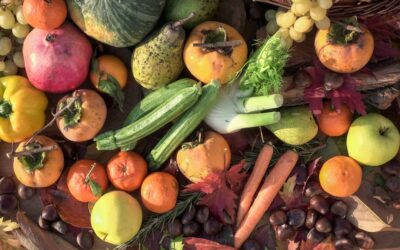
In celebrating God’s creation and understanding , that we are part of his wonderful world, we understand that Christ, the Pantocrator, the Ruler of All, wants to marry his creation in us.
Praying Together 4th October 2026
A Meditation for Trinity 18 - Harvest 2026CollectEternal God, you crown the year with your goodness and you give us the fruits of the earth in their season: grant that we may use them to your glory, for the relief of those in need and for our own well-being; through...
Praying Together 20th September 2026
Salvation.
It can’t be earned. No-one can get more than the next person. There are no degrees of salvation. Salvation is personal and unique to each human being. It is the complete gift – all you can ever need.
Praying Together 13th September 2026
Our responsibility in the Christian life is to prepare people for receiving the Gospel – remembering that they are able to meet Christ themselves directly in prayer and scripture. We cannot meet Him on their behalf, and in His walk alongside them they will grow as His body on earth.

Praying Together 30th August 2026
Just like those early disciples and apostles there’s an important work to continue. You and I are part of that bunch of followers – ordinary people – let’s keep that in mind – as we reach out to others, each and every day of our lives.

Praying Together 23rd August 2026
Cambridge dictionary definition: ‘Conform’ – to behave according to the usual standards of behaviour that are expected by a group or society.

Praying Together 16th August 2026
We share the shame of both if we fail to address the divisive hatred within our own purportedly Christian ‘tribe’ before condemning others. For Scripture also says Judge not lest ye yourself be judged (Matthew 7:1). Jesus Himself makes it clear that hypocrisy has no place in a Kingdom founded upon love.

Praying Together 9th August 2026
Trusting Jesus and obeying His call takes commitment, it takes faith, it takes the courage to face antagonism, discomfort and sometimes suffering.

Praying Together 26th July 2026
Just cling to the promise that neither height nor depth, nor anything else in all creation, will be able to separate us from the love of God that is in Christ Jesus our Lord

Pray Together 19th July 2026
We define hope as ‘to want something to happen or to be true, and have a good reason to think that it might’.

Praying Together 12th July 2026
But the real task to which godparents promise is to ensure that the newly-baptised are supported in their Christian growth, by prayer, advice and example.

Praying Together 5th July 2026
We obey His command, but not as slaves – instead, he invites us to be willing servants, alongside the freedom to always ask and reason together with Him as we choose our actions. Therein lies the path to Wisdom, and in God’s Wisdom lies gentleness, humility and rest for our souls.